FAQ - Frequently Asked Questions
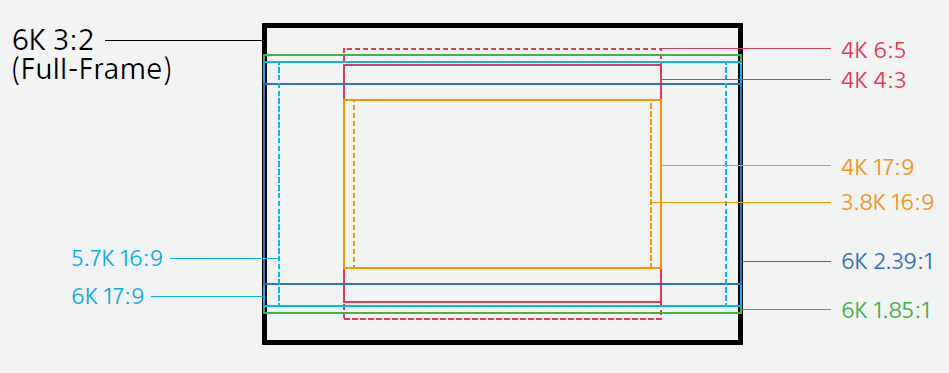
Both! VENICE has a 36mm x 24mm full-frame image sensor designed specifically for large-format high end cinematography, and can capture images up to a maximum resolution of 6048 x 4032. With a simple change of the imager mode setting, VENICE can natively support Super35 24.3 x 18.0 mm, 4096 x 3024 resolution (equivalent to 4-perforation motion picture film) and Super35 24.3 x 12.8 mm, 4096 x 2160 resolution (equivalent to 3-perforation motion picture film). This makes VENICE compatible with a wide range of large-format or Super35 lenses.
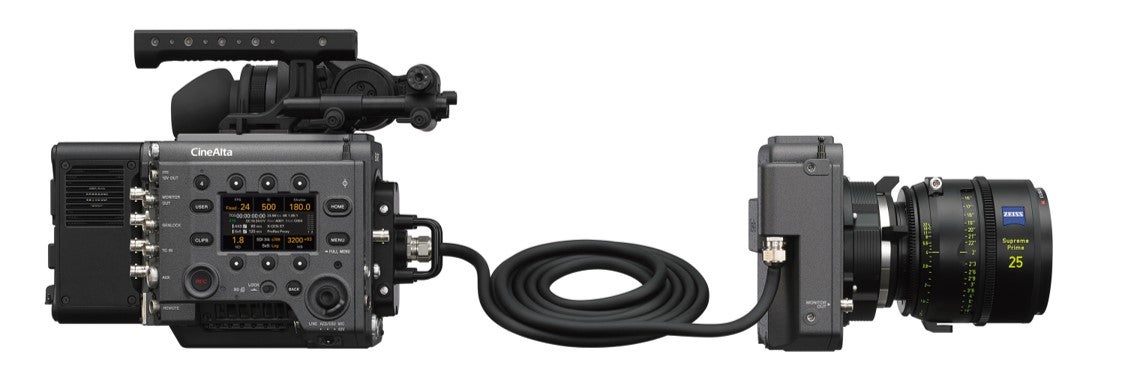
No, the VENICE Extension System (CBK-3610XS) -- nicknamed by its first users as "Rialto" after a famous bridge in Venice, Italy -- is a camera accessory that allows you to separate the image sensor block from the camera body by up to 18 feet through a cable connection. With the resulting smaller form factor, operators can move the camera in different ways, better utilize gimbals, and place VENICE in small spaces (for example, tight shots of pilots and drivers).
| CATEGORY | INTEREST |
|---|---|
Both! VENICE has a 36mm x 24mm full-frame image sensor designed specifically for large-format high end cinematography, and can capture images up to a maximum resolution of 6048 x 4032. With a simple change of the imager mode setting, VENICE can natively support Super35 24.3 x 18.0 mm, 4096 x 3024 resolution (equivalent to 4-perforation motion picture film) and Super35 24.3 x 12.8 mm, 4096 x 2160 resolution (equivalent to 3-perforation motion picture film). This makes VENICE compatible with a wide range of large-format or Super35 lenses.
No, the VENICE Extension System (CBK-3610XS) -- nicknamed by its first users as "Rialto" after a famous bridge in Venice, Italy -- is a camera accessory that allows you to separate the image sensor block from the camera body by up to 18 feet through a cable connection. With the resulting smaller form factor, operators can move the camera in different ways, better utilize gimbals, and place VENICE in small spaces (for example, tight shots of pilots and drivers).
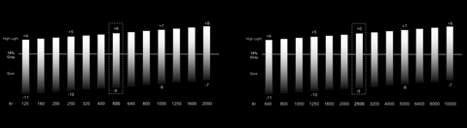
VENICE has dual base ISO, which means it has two native ISOs: 500 and 2500, and the noise floor is the same at each. You can quickly switch the base ISO when lighting conditions change. Within each base, the latitude can be adjusted to favor shadows or highlights by shifting the Exposure Index. In this chart, numerical +/- values measure stops of light.
VENICE has 8 stops of internal ND in single stop increments: 0.3, 0.6, 0.9, 1.2, 1.5, 1.8, 2.1, 2.4. Being able to quickly change the internal ND can save valuable time in critical moments of production.
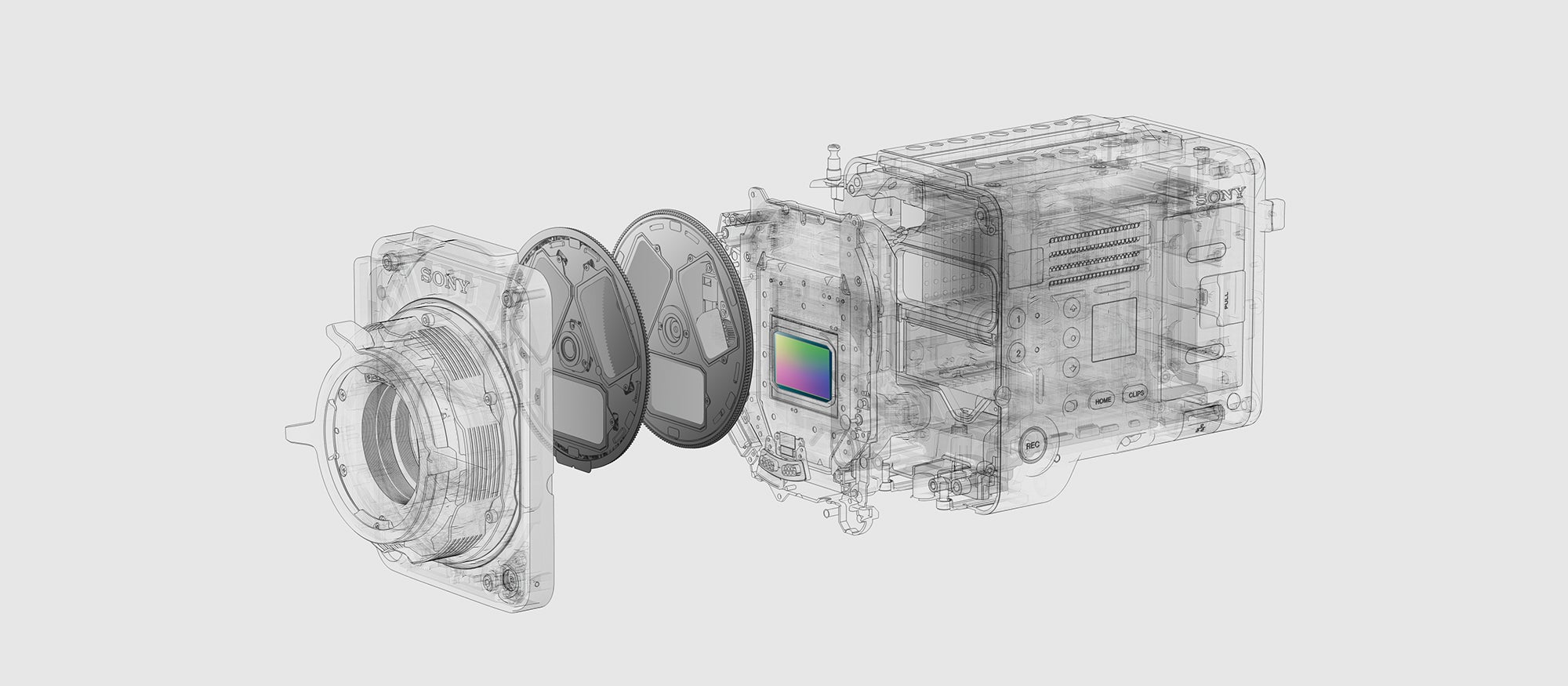
No, but there is a separate IR filter in the sensor module to filter out infrared light.
Almost everything is exactly the same, including full access to the internal NDs, dual base ISO, and imager modes. The only feature not available in VENICE while the image sensor block is extended from the camera body is use of the gyro sensor.
False Colors, High/Low Key, and Zebra
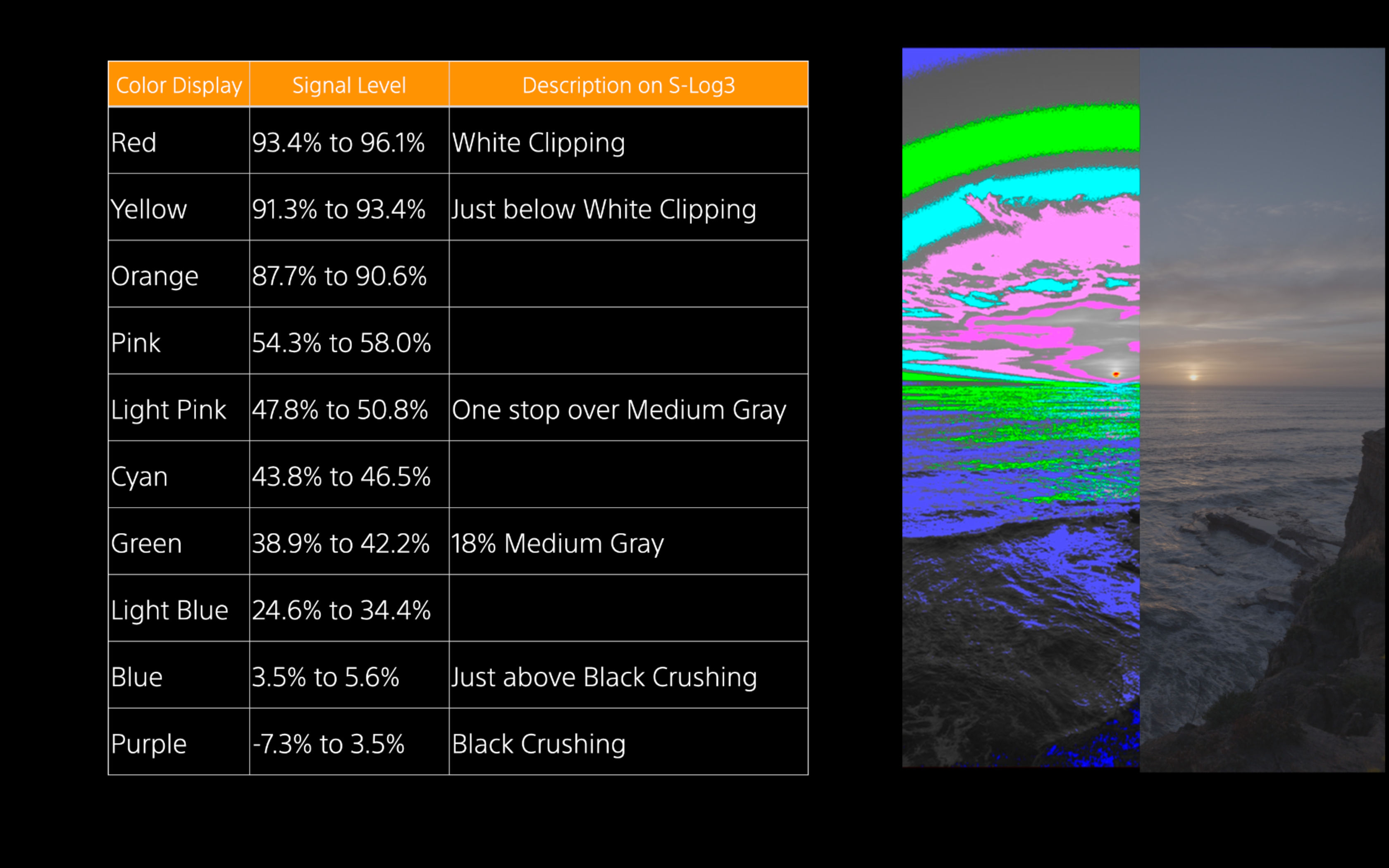
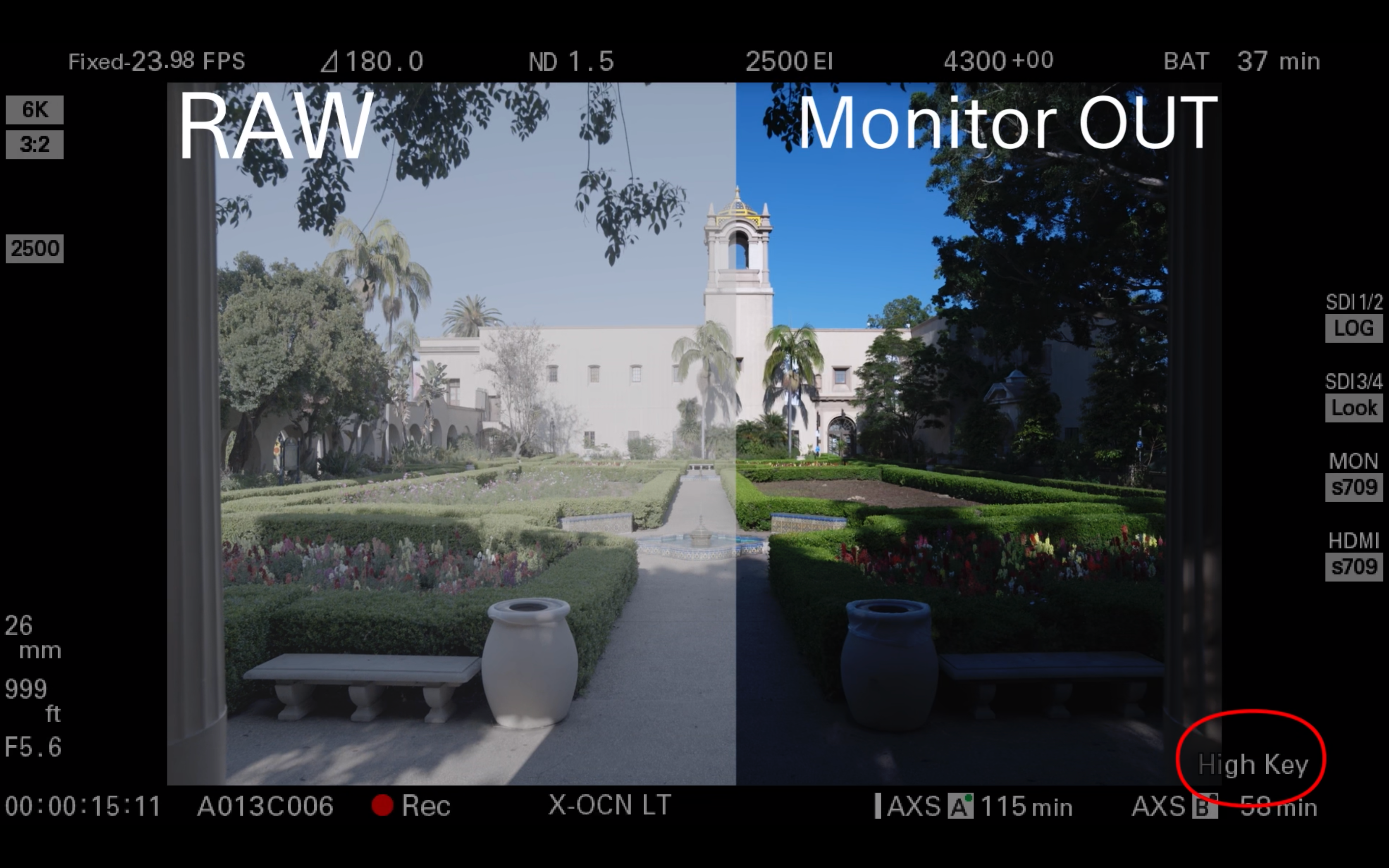
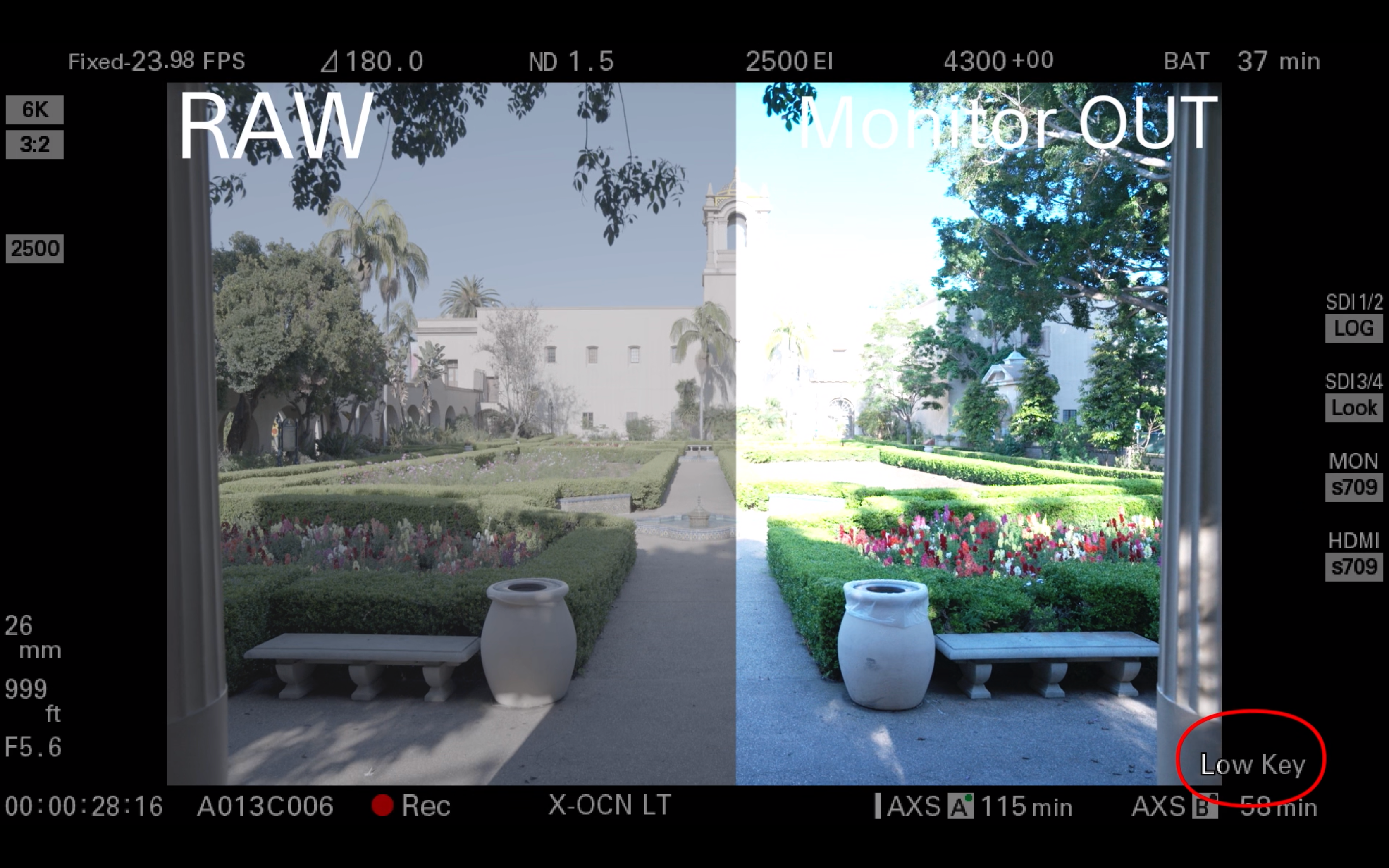
All the exposure tools available in VENICE monitor the Log signal.
The anamorphic imager modes, along with their respective de-squeeze modes are:
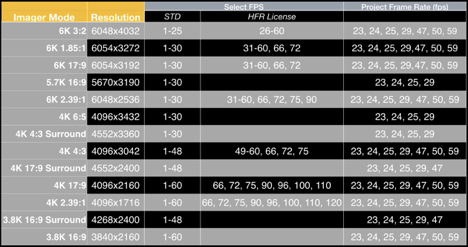
6K 3:2 - 1.25x, 1.3x, 1.5x, 1.65x, 1.8x, 2.0x
4K 6:5 - 2.0x
4K 4:3 - 1.3x, 1.65x, 1.8x, 2.0x
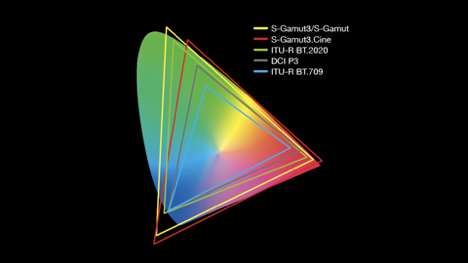
Yes, either in RAW or in S-Gamut3, which covers the working color space of HDR workflows, ITU-R BT.2020.
VENICE has many options available for high frame rate (HFR) recording in different imager modes. The highest HFR is 120 fps, which can be achieved in 4K 2.39 mode.
Venice comes preloaded with 3200k, 4300K and 5500k, but can easily be adjusted to fit your lighting condition needs.
Kelvin temperatures can be adjusted to the digit, as well as green/magenta shift. You can add multiple presets ahead of time that are easily available in the home screen.
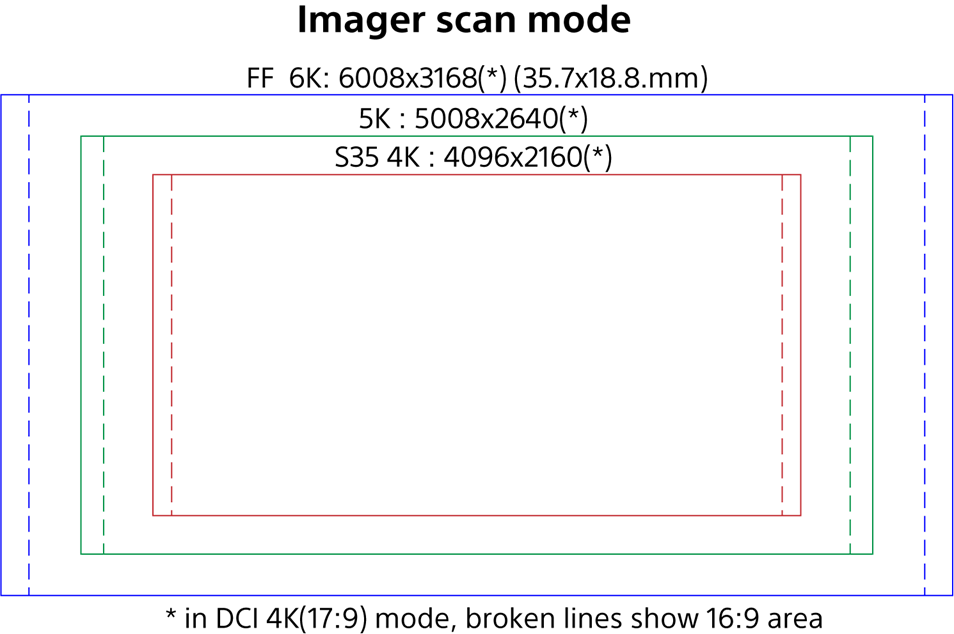
FX9 has a full-frame sensor that captures the image with a resolution of 6008 x 3168. The camera then downsamples the recording to a file with 4K UHD or DCI resolution (3840 x 2160 or 4096 x 2160*). This process provides additional richness of detail in an efficient file size. *Requires free Version 2.0 firmware upgrade.
Both! FX9 has a 36mm x 24mm full-frame image sensor designed to bring the image qualities of large-format cinematography to handheld shooting. However, the Super35 imager scan mode can be selected, making FX9 compatible with a wide range of large-format or Super35 lenses.
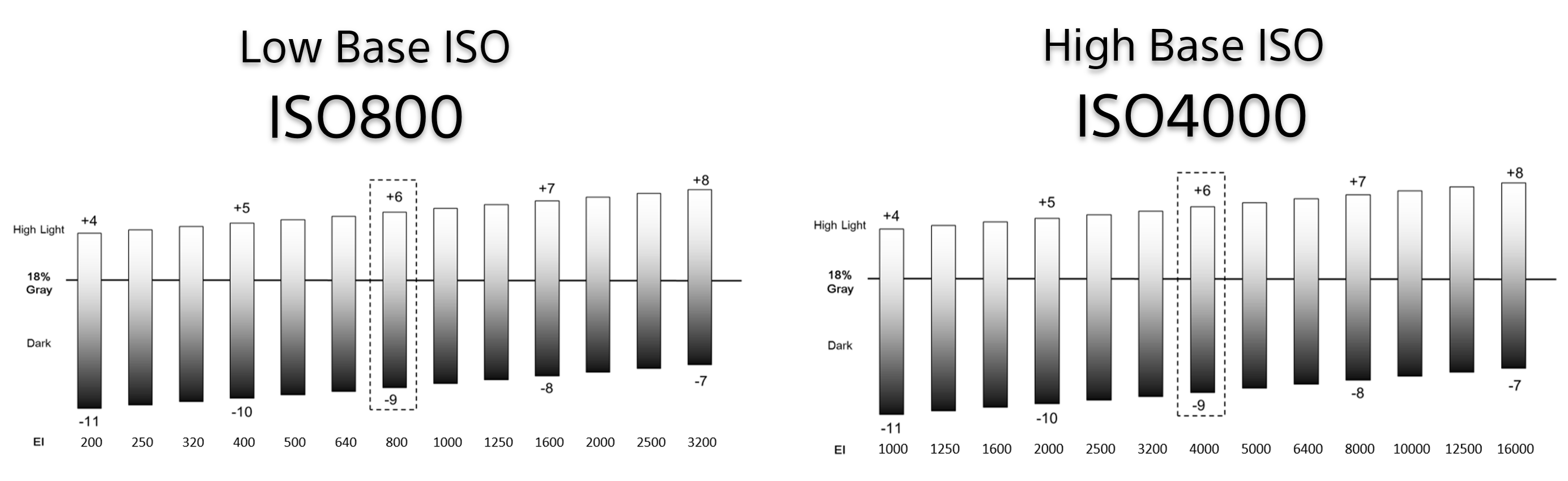
FX9 has dual base ISO, which means it has two native ISOs: 800 and 4000, and the noise floor is the same at each. You can quickly switch the base ISO when lighting conditions change. Within each base, the latitude can be adjusted to favor shadows or highlights by shifting the Exposure Index. In this chart, numerical +/- values measure stops of light.
FX9 has a full-frame electronic variable ND filter. You can set it to Auto, or adjust filter density manually in smooth increments from 1/4 to 1/128 as you shoot, for proper exposure without affecting depth of field as lighting conditions change.
AF technology is shared across many camera types, however signal processing varies depending on the model.
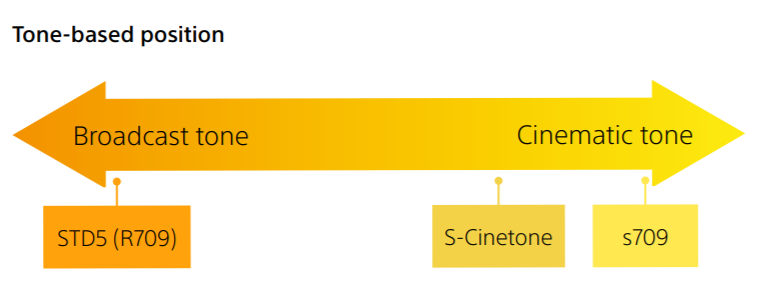
S-Cinetone is the monitoring look that comes with FX9. Inspired by the color science found in VENICE, S-Cinetone provides a rich cinematic look for the video world. You can choose to "bake-in" this look for productions that won't have additional color grading in post.
Although it may work in some cases, we can't guarantee AF performance when using a third party E-mount lens or a third-party adapter to another lens mount.
The signal processing process is the same, but because the image sensors are different, the picture quality is not completely the same.
As of the Version 2.0 firmware released in September 2020, users can import 3D LUTs from an SD card, store up to 16 files on the FX9’s internal memory, and switch between them as needed. This is particularly useful for shooting in S-Log3, allowing you to preview on camera whatever custom look you create.
Yes, with firmware V6.
FX9 has two XQD slots for main recording, and one SD/Utility slot for proxy recording.
